For a buyer of an attached home in Irvine, "who fixes what" is usually the least understood part of condo and townhome ownership before an offer, and the most discussed after close. California's Davis-Stirling Act draws the default lines: the association repairs, replaces, and maintains the common areas, the owner repairs, replaces, and maintains their own unit, and a third category called the exclusive-use common area splits the difference between the two. The catch is that the whole map can shift when a community's declaration, the CC&Rs, says otherwise, which is why reading the governing documents is the real homework.
This guide walks the default maintenance map in plain English, shows where the private patio, the windows, and the pipes inside the walls land under California law, and gives attached-home buyers a short checklist for reading a community's own allocation before they write an offer. It is buyer education, not legal or financial advice, and every rule below is attributed to a named source with the governing statute identified.
The one-line summary
Under California Civil Code section 4775, the association repairs, replaces, and maintains common areas, the owner repairs, replaces, and maintains their own unit, and for exclusive-use common areas such as patios, balconies, and windows the owner handles day-to-day maintenance while the association handles repair and replacement. Every one of those defaults can be moved by the declaration, so the maintenance schedule inside the CC&Rs is the first document to read before an offer.
The default map: three buckets
California Civil Code section 4775, part of the Davis-Stirling Act, divides repair and maintenance duty into three buckets. First, common areas: the association is responsible for repairing, replacing, and maintaining the common area, other than exclusive-use common areas. Second, separate interests: the owner of each unit is responsible for repairing, replacing, and maintaining their own separate interest. Third, exclusive-use common areas: the owner maintains the parts of the common area designated for their exclusive use, and the association repairs and replaces them. Everything hangs on those three definitions, and the statute repeats one phrase before each one: "unless otherwise provided in the declaration."
The first bucket is why a monthly association fee exists. In an attached community, shared roofs, exterior walls, walkways, pools, landscaping, and village infrastructure are common area, and when they need repair or replacement the association pays from reserves and fees rather than billing the owner of the unit underneath. The second bucket is intuitive: carpet or flooring, interior paint, cabinets, appliances, and interior fixtures sit inside the owner's separate interest, and keeping them up belongs to the owner.
A related rule fills a gap most people do not think about until a termite report arrives. Under Civil Code section 4780, in a condominium project the association is responsible for repairing and maintaining common areas damaged by wood-destroying pests and organisms. That is a meaningful line for attached buildings with wood-framed elements, and it is another reason the maintenance map matters more for a condo or townhome than for a detached house.
Unless the declaration says otherwise
The four words that change everything in California condo law are "unless otherwise provided in the declaration." Communities adopt CC&Rs when they are built, and those documents can reallocate nearly any maintenance duty. A declaration can assign roof maintenance to owners, a layout common in planned developments even though the roof defaults to common area. It can push window replacement onto the owner, or pull all exterior surfaces under the association's care, the pattern in many higher-density buildings.
What this means for a buyer is simple and easy to miss: the default map tells you what most communities look like, and the specific community's maintenance schedule tells you what this one looks like. Most declarations contain a maintenance and repair schedule, often as an exhibit, that allocates each component of the property to owner or association. Finding it and reading the roof, window, patio, and plumbing lines is the closest thing to a free survey of future repair bills.
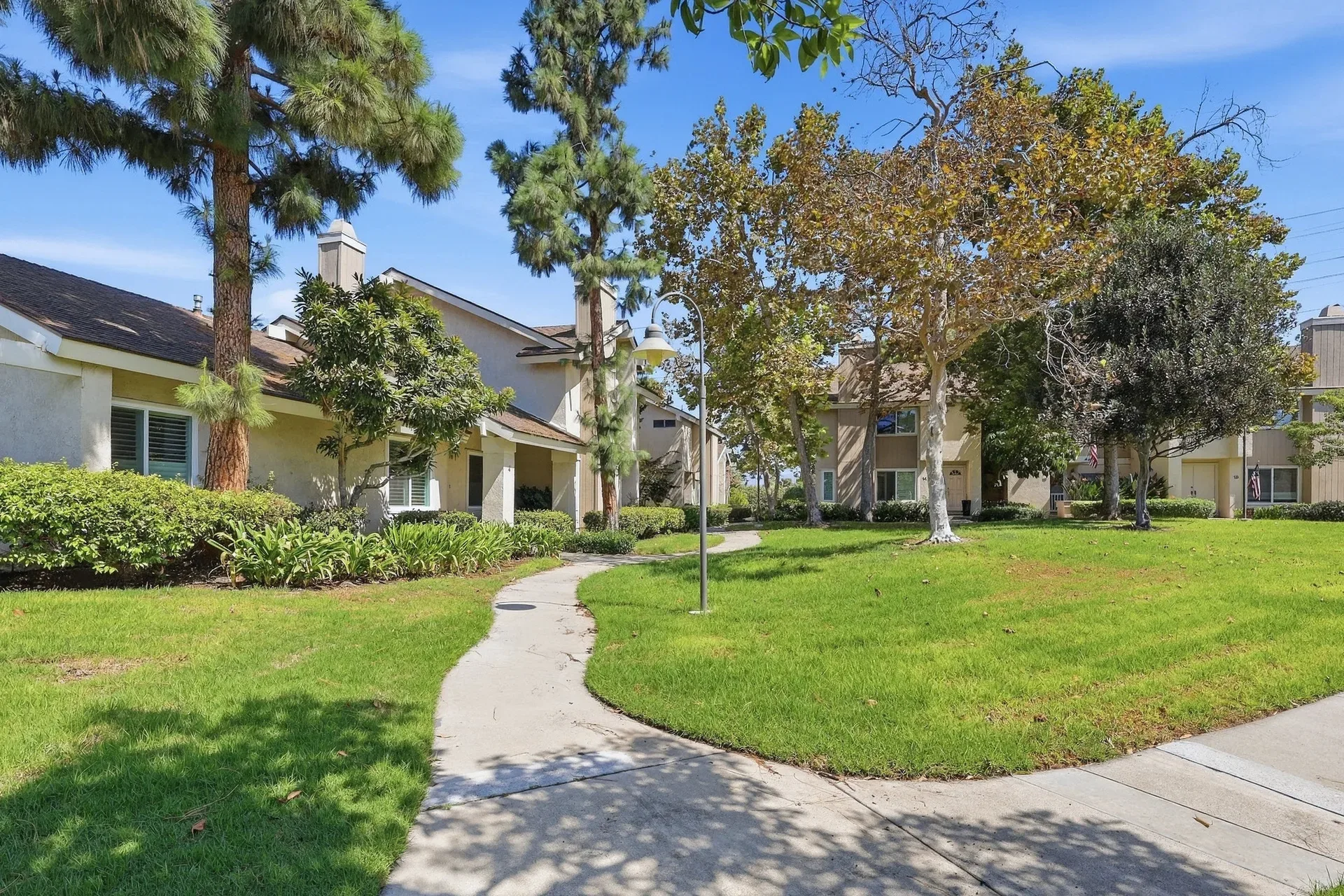
There is one more wrinkle worth knowing about older communities. Before January 1, 2017, many declarations used language that said the owner "maintains" an exclusive-use common area without addressing who repairs or replaces it when it fails. A 2016 law (AB 968) amended section 4775 so that, unless the declaration says otherwise, the association now handles repair and replacement of exclusive-use common areas while the owner keeps up routine maintenance. A community in a village like Woodbridge, built largely in the 1970s and 1980s, may have governing documents whose original wording predates that split, and those documents should be read with the current statute in mind.
The hybrids: patios, balconies, and windows
The third bucket, the exclusive-use common area, is where attached-home buyers should pay closest attention, because it includes the parts of the home that feel most personal: balconies, patios, decks, porches, doorsteps, walkways, and windows all appear on the statutory list in Civil Code section 4145 when they are designated for the use of fewer than all owners. Under the current version of section 4775, the owner is responsible for maintaining the exclusive-use common area appurtenant to their unit, which means the day-to-day upkeep: cleaning, sweeping, clearing drains, sealing, and similar routine care. The association is responsible for repairing and replacing it.
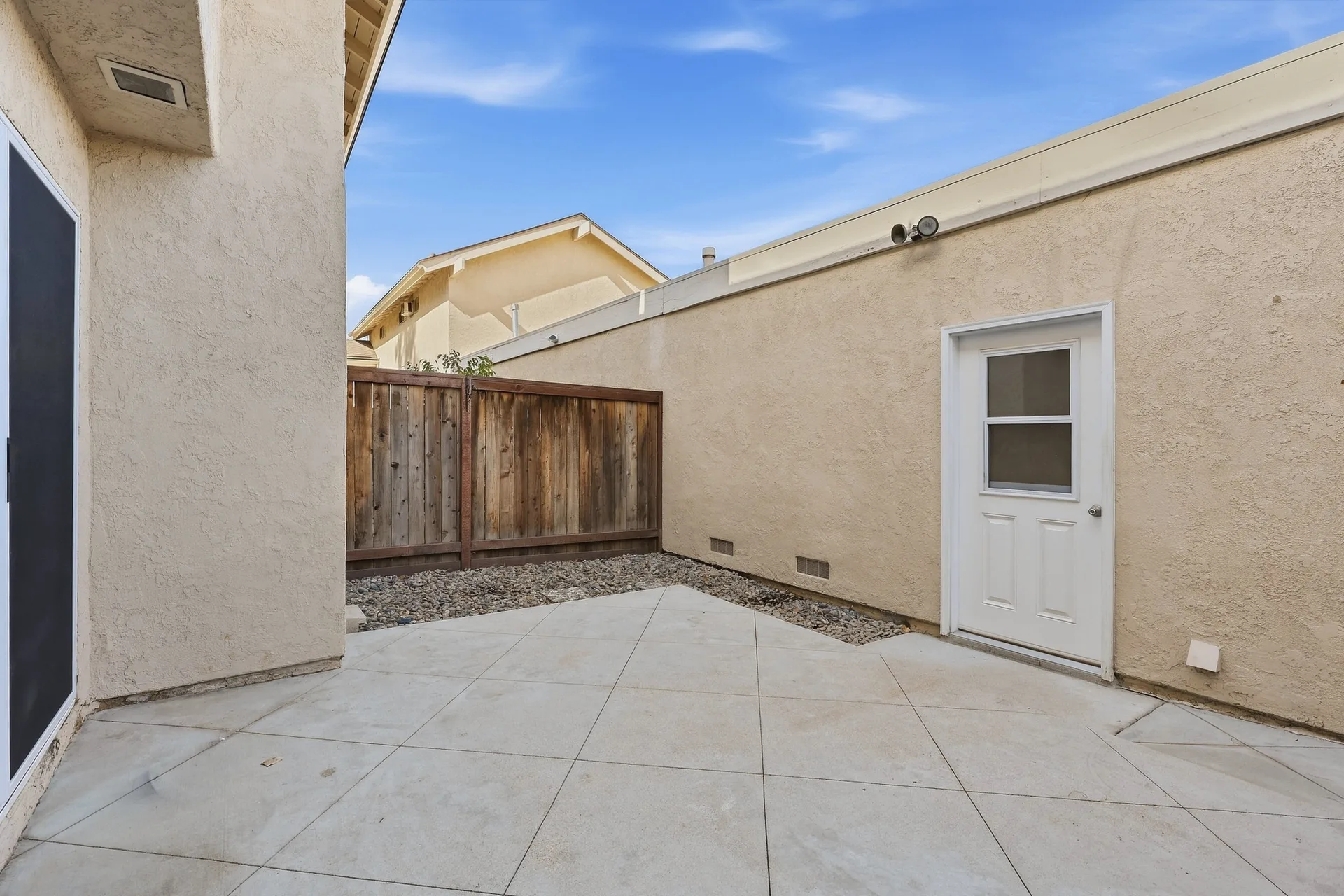
The private patio at 8 Silverwood is a good example of why this distinction matters to a buyer. Enclosed by a wood privacy fence and paved in concrete with a gravel border, it is the kind of outdoor room that anchors the way this home lives. In most Irvine associations, a patio of that kind is an exclusive-use common area: the owner keeps it clean, sealed, and presentable, and the association handles structural repair and replacement. The same logic applies to windows and to any balcony or porch. But the declaration is the final word, and some communities assign even routine patio care to the association or push window replacement onto the owner. The answer for any specific building comes from that building's documents, not from a general rule.
For balconies and elevated decks there is a second document to check alongside the maintenance schedule. Since January 2026, California sellers must include the association's most recent balcony- and elevated-element inspection report in the resale package, and the journal's HOA file guide walks through reading that report, the reserve study, and the special assessment picture in depth. Maintenance allocation and inspection status are different questions, but they point to the same conclusion: for an attached home, the shared structure is part of what you are buying, and it deserves the same scrutiny as the interior.
Inside the walls: pipes, service lines, and the unit boundary
Plumbing is where the "who fixes what" question gets genuinely confusing, because so much of the system is invisible. Section 4775 handles it with a straightforward rule: the association is responsible for repairing and replacing utility service lines that serve more than one separate interest or the common area, even when those lines run through an individual unit or an exclusive-use common area. In plain English, if a shared supply line buried in a wall between units fails, repair is generally an association matter, not a bill for the owner of the unit the water leaked into, unless a utility provider or the declaration assigns it elsewhere.
The owner side of that line is usually the fixtures and the visible branch plumbing: the faucet, the toilet, the shower valve, the dishwasher connection. Most California condos are "airspace" units, with the separate interest bounded by the unfinished interior surfaces of perimeter walls, floors, and ceilings, so what sits inside the finished space tends to be owner responsibility and what runs within the building envelope tends to be shared. Water heaters and HVAC equipment that serve only one unit are usually the owner's to replace, but confirming that in the schedule matters, because some declarations place rooftop or wall-mounted equipment under association care.
The practical takeaway for a buyer is to ask two pointed questions during the review period: which utility lines does the declaration assign to the association, and which fixtures fall to the owner? The answers change the shape of an emergency fund. A major line failure that is covered by reserves is an inconvenience, while one that lands on the owner is a several-thousand-dollar repair, and the distinction between the two is written down in the governing documents long before the leak happens.
Access, disruption, and the cost of temporary relocation
Because the association is responsible for the structure around the unit, repairs sometimes require entering the unit itself. The association's right to enter usually comes from the CC&Rs, which typically allow access for emergency repairs, for maintenance of common-area components, and to abate a nuisance or dangerous condition. Owners generally cannot refuse access when the governing documents or an emergency justify it, and refusing can itself be a violation of the rules the association is entitled to enforce.
The law also protects the owner during those disruptions. Under Civil Code section 4510, an association may not deny a member or occupant physical access to their own unit, so an association cannot use a repair project to block an owner from their home. Owners also hold an appurtenant easement for ingress, egress, and support through the common area unless the declaration says otherwise, per section 4505. What the law does not do is pay for the inconvenience: section 4775(c) places the cost of temporary relocation during association-responsible repairs on the owner of the affected unit. A buyer should treat a note in the board minutes about an upcoming exterior or roof project as a potential future hotel stay, and plan accordingly.
A buyer's checklist: reading the maintenance map before you buy
None of this requires becoming a condo-law specialist. It requires reading a few pages of the governing documents and asking direct questions while contingencies are still open. In rough order:
- Find the maintenance and repair schedule in the CC&Rs, usually an exhibit, and read the lines for roof, windows, patio or balcony, plumbing, and HVAC. Write down who owns each one in this community.
- Check whether the declaration predates the 2017 legislative update and, if it does, read the exclusive-use common area language with current Civil Code section 4775 in mind.
- Ask how shared repairs are funded: confirm the reserve study and the latest Reserve Funding Disclosure Summary are current, and ask whether any special assessment or major deferred project is planned. The HOA file guide in this journal explains how to read those documents.
- Confirm the association has completed its exterior elevated element inspection and request the report from the resale package, which California sellers must now provide. For a patio or balcony home, this is the document that describes the condition of the structure under your feet.
- Treat maintenance and insurance as separate questions. The association's master policy can cover a component without deciding who maintains it, and the condo financing guide covers the lender-side review of association insurance, reserves, and litigation.
- Ask whether owners have recently had to provide access for shared repairs, and whether any upcoming project may require temporary relocation, since those costs fall on the owner under section 4775(c).
- Add up what the fee covers against what you will pay out of pocket. For 8 Silverwood's community, the Market Intelligence page lists the Doe Trail Condo Association fee at approximately $582 per month and the Deerfield Community Association at approximately $351 per quarter. Those fees buy the shared structure and grounds, and the checklist above is how you see what the owner still owns.
- Run the full monthly picture at current numbers. The property tax guide walks through how association fees sit beside the tax bill, and the late-October market notes show where the 30-year rate and attached-home inventory stand.
- Have your agent, attorney, or lender review the maintenance allocation before you remove contingencies. Questions about who pays for a future roof or window replacement are far easier to resolve while the offer is subject to review than after close.
The companion pieces in this journal complete the picture. The HOA file guide covers the disclosure documents attached-home buyers now receive, the condo financing guide covers the project-level review a lender may raise, and the Market Intelligence page models purchase scenarios side by side. Laws and governing documents change, so treat anything here as a point-in-time summary and confirm the current statute and this community's declaration at the moment of your offer.
Sources and data notes
The statutory mechanics in this article are summarized from legal references and law-firm guides named below, each with an as-of date. The primary sources are:
- Davis-Stirling.com, "Civil Code 4775: Association and Owner Maintenance Responsibilities," accessed October 28, 2026. davis-stirling.com
- Davis-Stirling.com, "Common Area Maintenance," accessed October 28, 2026. davis-stirling.com
- FindHOA Law, "Civil Code Section 4775: Association and Owner Maintenance Responsibilities," accessed October 28, 2026. findhoalaw.com
- FindHOA Law, "Exclusive Use Common Area Maintenance," accessed October 28, 2026. findhoalaw.com
- Fiore Racobs & Powers, "Exclusive Use Common Area: 'Maintain' vs. 'Repair and Replace,'" accessed October 28, 2026. fiorelaw.com
- R.O. Attorneys, "The Misunderstood 'Exclusive Use Common Area,'" accessed October 28, 2026. roattorneys.com
- MBK Chapman, "Who Pays for California HOA Common Area Repairs? Understanding Civil Code 4775," accessed October 28, 2026. mbkchapman.com
- Davis-Stirling.com, "Right to Enter Units," accessed October 28, 2026. davis-stirling.com
- FindLaw, California Civil Code section 4510 (access to separate interests), accessed October 28, 2026. codes.findlaw.com
- Pipere Restoration Solutions, "HOA Plumbing Responsibilities in California," accessed October 28, 2026. piperestorationsolutions.com
Data notes: the maintenance map summarizes Civil Code sections 4145, 4505, 4510, 4775, and 4780 as set out by the cited legal references and is point-in-time. Every allocation in the statute defaults to "unless the declaration provides otherwise," so whether a particular component in a particular building is owner or association duty must be confirmed from that community's declaration and current governing documents. The association fee figures for 8 Silverwood's community come from the site's Market Intelligence page and are approximate, presented as of October 2026, and should be verified with the association. Bedroom, bathroom, and square footage figures for 8 Silverwood are from public listing data for MLS NP26199481 and should be independently verified. This article is education, not legal, insurance, tax, or financial advice.
Explore More of 8 Silverwood
Continue into Market Intelligence, the Neighborhood guide, Property Resources, or the photo gallery for additional property information, buyer resources, and local context.