Buying a condo or townhome in California means signing up for two layers of insurance that a single-family buyer never has to think about. The association carries a master policy that covers the buildings and common areas, and you carry an HO-6 policy that covers the inside of your unit, your belongings, your liability, and a slice of coverage called loss assessment. Where the line falls between the two is decided by the association's governing documents, not by your agent or your lender, and reading that boundary before an offer is one of the most useful things an attached-home buyer in Irvine can do.
This guide walks through what each policy covers, why the standard loss-assessment limit in an HO-6 is usually too small for California, how earthquake coverage works through the California Earthquake Authority, and the lender rules that took effect in July 2026 connecting master-policy deductibles to your financing. Every figure below is attributed to a named source with an access date of November 12, 2026, and nothing here replaces the declaration pages of the actual policies for a building you are considering.
The one-line summary
A California condo owner carries an HO-6 policy that covers the interior of the unit, personal property, personal liability, loss of use, and loss assessment, while the association's master policy covers the buildings and common areas. Standard HO-6 policies include only about $1,000 of loss assessment coverage, which is usually far too small when master-policy deductibles can run five and six figures, so California owners are advised to raise that limit to at least $25,000 to $50,000. Earthquake is a separate, optional decision: only about 13% of California homeowners carry it, and the California Earthquake Authority offers a condo-specific policy with its own deductible structure.
Why an attached home has two insurance layers
A single-family buyer carries one homeowners policy that covers the house and everything in it. A condo or townhome buyer carries a piece of the building's insurance through the association's master policy, plus an individual policy of their own, the HO-6. The master policy is paid for out of the HOA dues you see on the listing, and it is the reason those dues are part of the ownership math, not just a monthly line item.
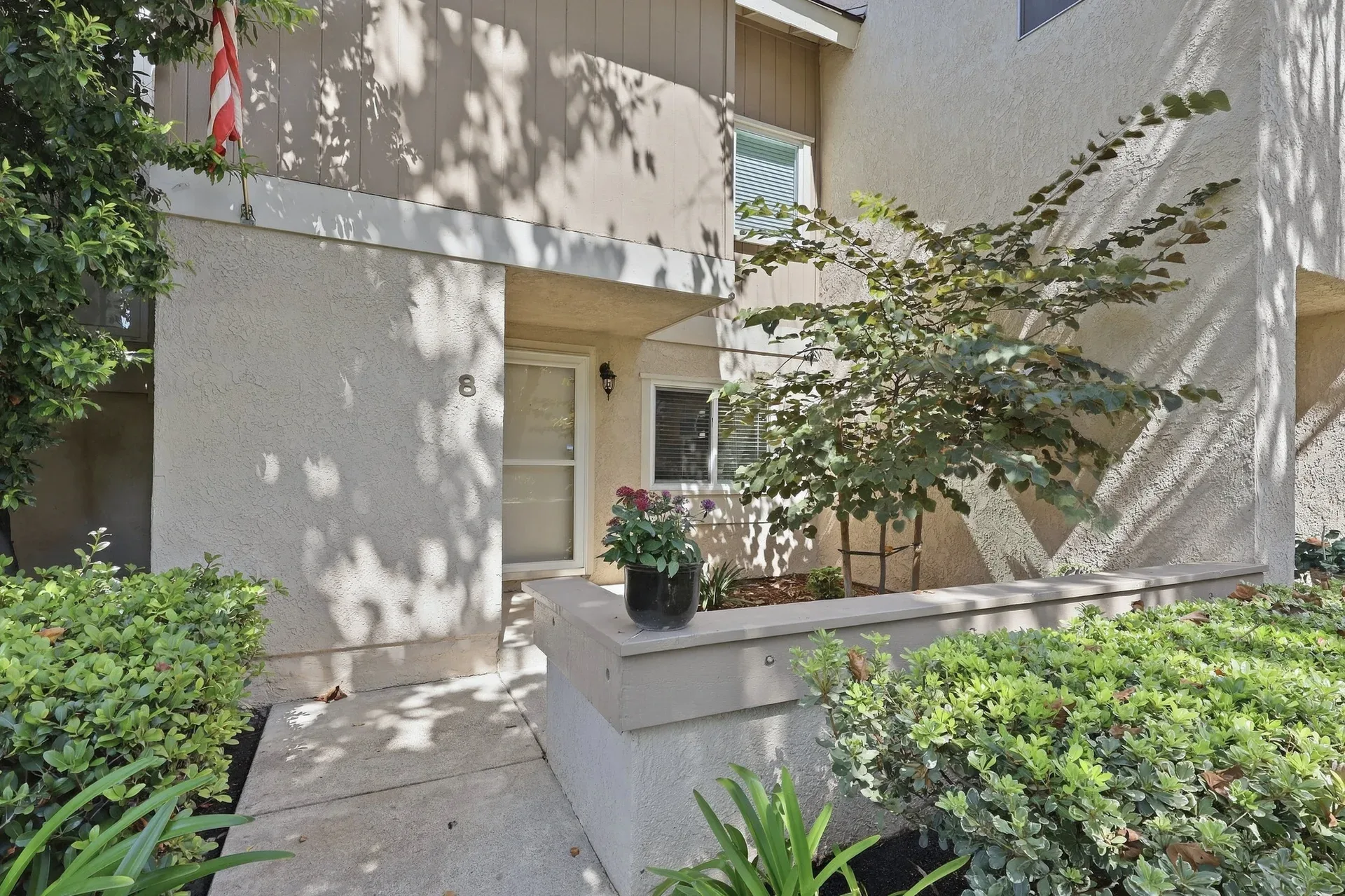
For a home like 8 Silverwood in the Deerfield area of Woodbridge, the two associations in the picture, the Doe Trail Condo Association at approximately $582 per month and the Deerfield Community Association at approximately $351 per quarter, both fund layers of that shared protection. What the homeowner pays for individually, on top of those dues, is the HO-6 premium. In plain terms: the dues buy the building's insurance, and your HO-6 buys yours.
The split is not uniform across California. Some master policies are "bare walls-in," covering the structure and common areas while everything from the drywall inward is the owner's job to insure. Others are "all-in" or single-entity policies that extend into the unit interior. The same building can feel very different to insure depending on which kind its association carries, which is why the boundary question comes before the premium question.
What the master policy covers, and the boundary in the CC&Rs
The association's master policy typically covers the building structure and exterior, the common areas such as pools, walkways, and clubhouses, shared systems like plumbing and electrical inside the walls, and the association's general liability on those common areas. It also usually carries directors and officers coverage for the board and fidelity coverage that protects association funds against theft or embezzlement.
California law does not set a fixed dollar minimum for the master property policy. Instead, the practical requirements come from two places: the association's own governing documents, which say who insures what, and the lenders that finance units in the project, which typically expect the master policy to cover full replacement cost, a meaningful general liability limit, and fidelity coverage. The Davis-Stirling Act, the body of California law that governs HOAs, also requires transparency: under Civil Code section 5300(b)(9), the annual budget report must summarize the association's property, general liability, earthquake, flood, and fidelity insurance, with the insurer, limits, and deductibles, and under section 5810 the association must notify members if a policy lapses, is canceled, is not renewed, or replacement coverage will not be in place.
For the buyer, the master policy matters in two ways at once. It is part of the property you are buying into, and its deductibles and exclusions can land on your personal bill through loss assessment. It is also part of your loan file, because lenders review the project's insurance as part of condominium eligibility, a subject covered in more depth in this journal's condo financing explainer.
What an HO-6 policy covers
The HO-6 is the unit owner's own policy, and in a typical bare walls-in building it covers everything the master policy stops at the door. In plain terms, five coverages make up the policy:
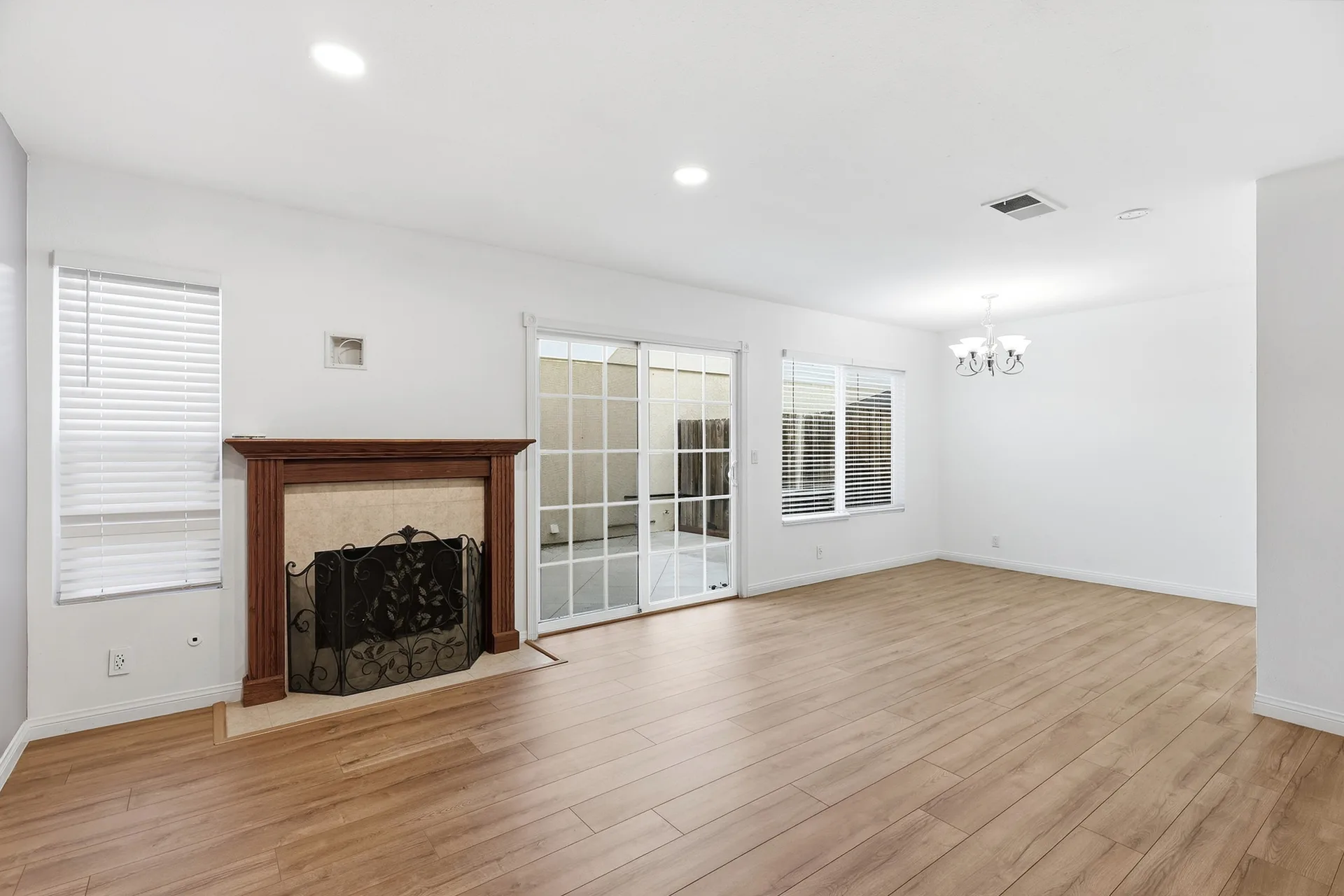
- Walls-in dwelling coverage. Interior walls, flooring, fixtures, cabinets, built-in appliances, and the improvements and alterations the owner makes. This is the coverage that rebuilds the inside of your unit, and it is the reason a remodeled kitchen or upgraded flooring should push the coverage amount up.
- Personal property. Your belongings inside the unit, from furniture to electronics to clothing, typically insured to a limit you choose.
- Personal liability. Protection if someone is injured in your unit or you cause damage to another unit or the common areas, plus medical payments coverage for minor injuries.
- Loss of use. Additional living expenses if a covered loss makes your unit uninhabitable while it is repaired.
- Loss assessment. Coverage for special assessments charged to you when the master policy comes up short, because of a large deductible or an uninsured loss. This is the coverage California buyers most often underinsure.
One note on the attached garage at a home like 8 Silverwood: whether the garage is treated as part of the unit, an exclusive-use common area, or a common area is defined by the governing documents, and that definition decides which policy, master or HO-6, responds to a loss there. It is a specific question to ask rather than assume, because an attached two-car garage is a significant part of the property.
Loss assessment: the small default that can become a big bill
Loss assessment coverage exists for a specific scenario. When the association suffers a covered or uncovered loss and the master policy does not pay the full bill, because of a high deductible or a coverage gap, the association can levy a special assessment across the owners to make up the difference. Your HO-6's loss assessment coverage reimburses you for your share of that assessment, up to your policy limit.
Here is the catch that California buyers should hear early: standard HO-6 policies include only about $1,000 of loss assessment coverage by default. In California's current market, master-policy deductibles on wildfire and water losses can run five and six figures, so a single claim can produce a per-owner assessment far larger than $1,000. That is why insurance writers in the state advise owners to raise the loss assessment limit to at least $25,000 to $50,000, and many owners choose higher.
The lender rules reinforce this. Fannie Mae Lender Letter LL-2026-03 and Freddie Mac Guide Bulletin 2026-C, both issued March 18, 2026, tightened master-policy deductible requirements for loan applications dated on or after July 1, 2026: if the master policy includes a per-unit deductible, it may not exceed $50,000 per unit, and the per-occurrence deductible may not exceed 5% of the master policy coverage amount. In other words, the people who finance the building agree that oversized deductibles are a problem, and they now cap them for the projects they will buy loans on. Your HO-6 loss assessment limit is the personal layer that sits behind those numbers.
Earthquake: the separate decision California owners face
Neither the master policy nor a standard HO-6 covers earthquake damage. Earthquake coverage in California is a separate purchase, and the main provider is the California Earthquake Authority, or CEA. For condominium owners, the CEA offers a condo-unit policy with several parts:
- Coverage A, building property, repairs and replaces the interior structural components of the unit itself, such as cabinetry, carpeting, and built-in appliances, plus the owner's improvements. The association's policy covers the exteriors and common areas.
- Coverage C, personal property, covers furniture, electronics, and belongings, and is optional. The CEA lowered the maximum personal-property limit from $200,000 to $25,000 starting in 2023.
- Coverage D, loss of use, pays extra living expenses if you cannot occupy the unit after a quake. It carries no deductible, but it must be bought together with personal property coverage, in limits from $1,500 to $100,000.
- Optional loss assessment coverage, up to $100,000, pays your share of an association assessment for earthquake damage to the building or common areas, in available limits of $25,000, $50,000, $75,000, or $100,000.
Deductibles on the building and personal property portions are a percentage of the coverage limit, typically 5%, 10%, 15%, 20%, or 25%. There is no flat statewide rate; premiums depend on location, seismic risk, the building's construction, the coverages chosen, and the deductible. Earthquake premiums for a typical California home commonly run in the range of about $800 to $1,000 a year, with wide variation, and one CEA condo estimate sampled at roughly $939 a year at a 15% deductible.
Despite the state's seismic risk, take-up is low: only about 13% of California homeowners carry earthquake insurance, roughly 1.5 million households and about 12% of eligible homes in 2023, according to the California Department of Insurance. Whether to buy it is a personal risk decision with no right answer, but it should be a deliberate one, not an assumption that the HOA dues cover it.
How insurance meets financing
Insurance is not just a protection story; it is part of the loan. Lenders review a condo project's master policy as part of project eligibility, and the July 1, 2026 rule changes added a specific requirement: when the master policy carries a per-unit deductible or does not cover the unit interior, the borrower must obtain an individual HO-6 policy that the underwriter must verify. In a bare walls-in building, that means your HO-6 is not optional for financing; the lender wants to see it, at limits that cover what the master policy leaves out.
This is the connection the earlier entries in this journal build on. The HOA file guide under SB 326 covers the master-policy deductible limits and the disclosure package, the maintenance map covers the repair boundary between owner and association, and the financing explainer covers the lender-side review of association insurance, reserves, and litigation. This article fills in the personal side: what your own policy needs to do.
Five questions to ask before you write an offer
None of this requires becoming an insurance specialist. It requires asking five questions and reading the answers before an offer:
- What is the insurance boundary? Is the master policy bare walls-in or all-in, and where does the governing document draw the line between what the association insures and what the owner insures? Ask specifically about the patio, the garage, and any exclusive-use areas.
- What are the master-policy deductibles? A per-unit or per-occurrence deductible above the July 2026 lender caps can affect both financing and your loss-assessment exposure.
- Is the master policy at replacement cost, and who is the carrier? Also ask whether the policy is current, which you can verify against the association's annual budget report insurance summary required under Civil Code section 5300(b)(9).
- What is the HO-6 loss assessment limit? Plan to set it well above the roughly $1,000 default, at least $25,000 to $50,000 in California, and confirm the quote includes it.
- Is earthquake a yes or a deliberate no? If yes, get a CEA condo-unit quote with the personal property, loss of use, and optional loss assessment pieces priced in, and read the percentage deductible for what it means on a real dollar amount.
What this means for an Irvine attached-home buyer
Irvine's attached inventory is dominated by managed communities, so the two-layer insurance question is not an edge case; it is the norm for buyers looking at condos and townhomes in places like the Deerfield area of Woodbridge. Two buyers touring similar units in the same neighborhood can come away with very different real monthly costs depending on the master policy, the deductibles, and what each chooses for their HO-6 and earthquake coverage.
For 8 Silverwood specifically, the home is listed at $810,000 with approximately 1,068 square feet, two bedrooms, two and a half baths, an attached two-car garage, and a private patio. Its listing data references the Doe Trail Condo Association at approximately $582 per month and the Deerfield Community Association at approximately $351 per quarter. What those dues do not tell you on their own is the insurance boundary and the deductibles behind them; those are document questions to put to the association and the listing team, ideally before an offer, because the answers shape both the HO-6 premium and the loss-assessment exposure.
The adjacent entries in this journal build the same file: the HOA disclosure guide under SB 326, the maintenance responsibility map, the FHA project approval guide, and the market notes for the week of November 9, which show the 30-year rate at 7.18% and Irvine's attached inventory still growing. When buyers have more inventory to compare and financing programs are in flux, the cost of ownership items like insurance become part of the comparison, which is exactly the discipline an attached-home buyer in Irvine benefits from this month.
Sources and data notes
The coverage descriptions and figures in this article are drawn from the named references below, each with an access date of November 12, 2026:
- California Civil Code sections 5300(b)(9) and 5810, Davis-Stirling Act, for the association's annual budget report insurance summary and the lapse-and-cancellation notice duty. california.public.law
- Davis-Stirling.com, "Board Duties Regarding Insurance," for the association's insurance obligations and the lender-driven coverage minimums. davis-stirling.com
- Policygenius, "HO-6 Condo Insurance: How It Works," for the five HO-6 coverages and typical premium range. policygenius.com
- Latent Insure, "Condo HO-6 Insurance California: Unit-Owner Coverage in an HOA," for California master-policy context, the loss-assessment default, and the advised limits. latentinsure.com
- Coverforge, "Condo Insurance (HO-6): What Your Master Policy Doesn't Cover," for the bare walls-in versus all-in master-policy boundary. coverforgeusa.com
- Merlin Law Group, "Loss Assessment Coverage Under the HO6 Condominium Policy," for the loss-assessment coverage mechanism and typical limits. merlinlawgroup.com
- California Earthquake Authority, "California Earthquake Insurance for Condominiums" and "Coverages and Deductibles," for the CEA condo-unit coverage parts, limits, and deductible options. earthquakeauthority.com
- California Department of Insurance earthquake take-up figures, reported via NPR and the San Francisco Chronicle, for the roughly 13% share of California homeowners carrying earthquake insurance and the about 1.5 million household count. npr.org
- ValuePenguin, "How Much Does Earthquake Insurance Cost in California?," for the typical premium range and a sampled CEA condo estimate. valuepenguin.com
- Fannie Mae, Lender Letter LL-2026-03 (March 18, 2026) and Freddie Mac Guide Bulletin 2026-C, for the master-policy deductible limits effective for loan applications dated on or after July 1, 2026, as also described in this journal's SB 326 article. selling-guide.fanniemae.com
Data notes: the HO-6 coverage descriptions, the roughly $1,000 standard loss-assessment limit, the $25,000 to $50,000 advised range, and the typical $760 to $825 annual HO-6 premium range are from the cited insurance references and vary by insurer and building. The earthquake premium range of about $800 to $1,000 a year and the sampled CEA condo estimate of roughly $939 a year at a 15% deductible are illustrative; actual premiums depend on location, construction, coverages, and deductible. The roughly 13% earthquake take-up and about 1.5 million household figures reflect state estimates from the California Department of Insurance as reported by the cited outlets. The Fannie Mae and Freddie Mac deductible caps, $50,000 per-unit and 5% per-occurrence, effective for loan applications dated on or after July 1, 2026, follow the same rule this journal described in its SB 326 article. The association fee figures for 8 Silverwood, Doe Trail Condo Association approximately $582 per month and Deerfield Community Association approximately $351 per quarter, come from the site's Market Intelligence page, and bedroom, bathroom, and square footage figures are from public listing data for MLS NP26199481 and should be independently verified. Whether a specific building's master policy is bare walls-in or all-in, its deductibles, and its carrier are document facts to confirm with the association and your insurer, not assumptions. This article is education, not insurance, mortgage, legal, tax, or financial advice.
Explore More of 8 Silverwood
Continue into Market Intelligence, the Neighborhood guide, Property Resources, or the photo gallery for additional property information, buyer resources, and local context.