California law gives owners in an HOA-governed condo or townhome an explicit right to install an electric vehicle charging station, and this year it also simplified the insurance rules around that right. Under Civil Code section 4745, part of the Davis-Stirling Act, an association cannot prohibit or unreasonably restrict the installation or use of an EV charging station in an owner's unit or in a designated parking space, and any governing-document provision that tries to do so is void and unenforceable. Beginning January 1, 2026, SB 770 also removed the old $1,000,000 liability minimum and the requirement that the association be named as an additional insured, while the owner's duty to carry liability coverage and provide a certificate remains.
This guide walks the statute in plain English for an Irvine buyer: who has the right and where it applies, the "reasonable restrictions" an HOA can still impose, the 60-day approval clock, what the owner pays for, the 2026 insurance changes, and a short checklist of things to verify before you write an offer. It is buyer education, not legal or insurance advice, and every rule below is attributed to a named source with an access date.
The one-line summary
Under California Civil Code section 4745, an HOA cannot prohibit or unreasonably restrict an owner's EV charging station in the owner's unit or a designated parking space; an application that is not denied in writing within 60 days is deemed approved; and the owner pays for the station, installation, electricity, maintenance, and liability coverage, which since January 1, 2026 no longer requires a $1,000,000 minimum or a named additional insured under SB 770.
The right to charge: who has it and where
Section 4745 applies to common-interest developments, which in California covers condominiums, townhomes, and planned developments governed by an association under the Davis-Stirling Act. The right is stated as a prohibition on the board: the board of directors shall not prohibit the installation or use of an electric vehicle charging station in an owner's unit or in a designated parking space. The statute then defines the covered spaces broadly to include a deeded parking space, a space in an exclusive-use common area, and a space in the common area that the owner has a right to use.
That breadth matters in established Irvine villages like Woodbridge, where parking can be an attached garage, a carport, a deeded stall, or an undesignated common-area spot depending on the building and its plans. A provision in the CC&Rs or in the rules that effectively prohibits or unreasonably restricts installation or use is void and unenforceable, so a community that never updated its documents for electric vehicles cannot simply wave an old rule at a charging request. The right attaches to the owner's space, not to the association's preference.
The local stakes are not hypothetical. The California Energy Commission reported that zero-emission vehicles, a category covering battery-electric, plug-in hybrid, and fuel-cell cars, were 19.1% of California's new-car sales in the third quarter of 2026, with fully electric vehicles at 16.3% on their own (CEC release, October 16, 2026). As more Irvine households add an electric or plug-in vehicle, where and how it charges at home is becoming a routine part of attached-home buying, and the law gives owners a defined set of rights to plan around.
The "reasonable restrictions" standard
The right is not unlimited. An association may adopt rules governing the installation and use of a charging station, as long as the rules do not significantly increase the cost of the station or significantly decrease its efficiency or specified performance. That is the test most board policies are drafted against: a rule that makes charging financially impractical or technically ineffective would fail it, while a rule that protects the building's structure, electrical system, or shared spaces can pass.
Section 4745 also spells out the requirements an HOA may place on an approved installation. The owner obtains the board's written approval, complies with the community's architectural standards, uses a licensed contractor for the installation, provides a certificate of insurance, and pays for the electricity the station uses. Those items are the approved list, and a board's rules should be read against it rather than as a blank menu the association can expand at will.
The 60-day approval clock
The approval process has a built-in deadline. The owner submits a written application, and the request must be approved or denied in writing. If the association has not denied the application in writing within 60 days of receiving it, with an allowance for a reasonable request for more information, the application is deemed approved. For a buyer, that clock is meaningful: a board that simply does nothing cannot block charging by silence, and every step of the exchange leaves a paper trail.
In practice this means the process is about documentation. A written application with the proposed station model, the location, the contractor, and the electrical plan gives the board what it needs to respond, and it gives the owner the record the statute depends on when the board misses its window. Buyers who want a charging-ready home should ask how the community has handled recent applications, because the practical question is rarely whether the board can say no, it is whether the process moves cleanly from request to approval.
SB 770 and the 2026 insurance changes
This is the part of the law that changed most recently, and the change is favorable to owners. Before 2026, the owner's required liability coverage had to carry a minimum of $1,000,000 and name the association as an additional insured, with a certificate of insurance due within 14 days of approval and annually thereafter. SB 770 (Stats. 2025, chapter 525) deleted the minimum coverage amount and the additional-insured requirement effective January 1, 2026.
The owner must still maintain liability coverage for the station and provide the certificate on the same schedule, so "no minimum" is not "no insurance." What the change removes is the fixed dollar floor and the need to have the association listed on the owner's policy, two requirements that had made condo charging retrofits measurably harder to arrange. It is also a reason to read the community's current rules rather than a dated summary: some association guidelines still carry the old $1,000,000 language even though state law no longer requires it, and those guidelines are where an outdated requirement would live on.
Who pays for the station and the power
The economics are the owner's. The owner pays for the station itself, the installation, and the electricity used, and the owner is responsible for the station's maintenance and repair and for any damage it causes. Common-area work, such as a conduit run across a shared wall or parking structure, is part of the installation the owner funds, which is why the electrical plan prepared by a licensed contractor matters before approval rather than after.
On resale, the owner must disclose the charging station to a buyer. That disclosure trail matters when you purchase a home that already has a charger: the paperwork should show the station, its approval, and its insurance certificate, and a buyer should ask whether any obligations to maintain or remove the station pass with the sale. Enforcement is similarly defined: if an association willfully violates section 4745, California law exposes it to the owner's actual damages, a civil penalty of up to $1,000, and the owner's attorney's fees if the owner prevails. Those remedies make the statute a practical reference point when a request stalls.
What to check before you offer
For a buyer of an attached home in Irvine, a charging question is really six smaller questions, and only some of them are legal:
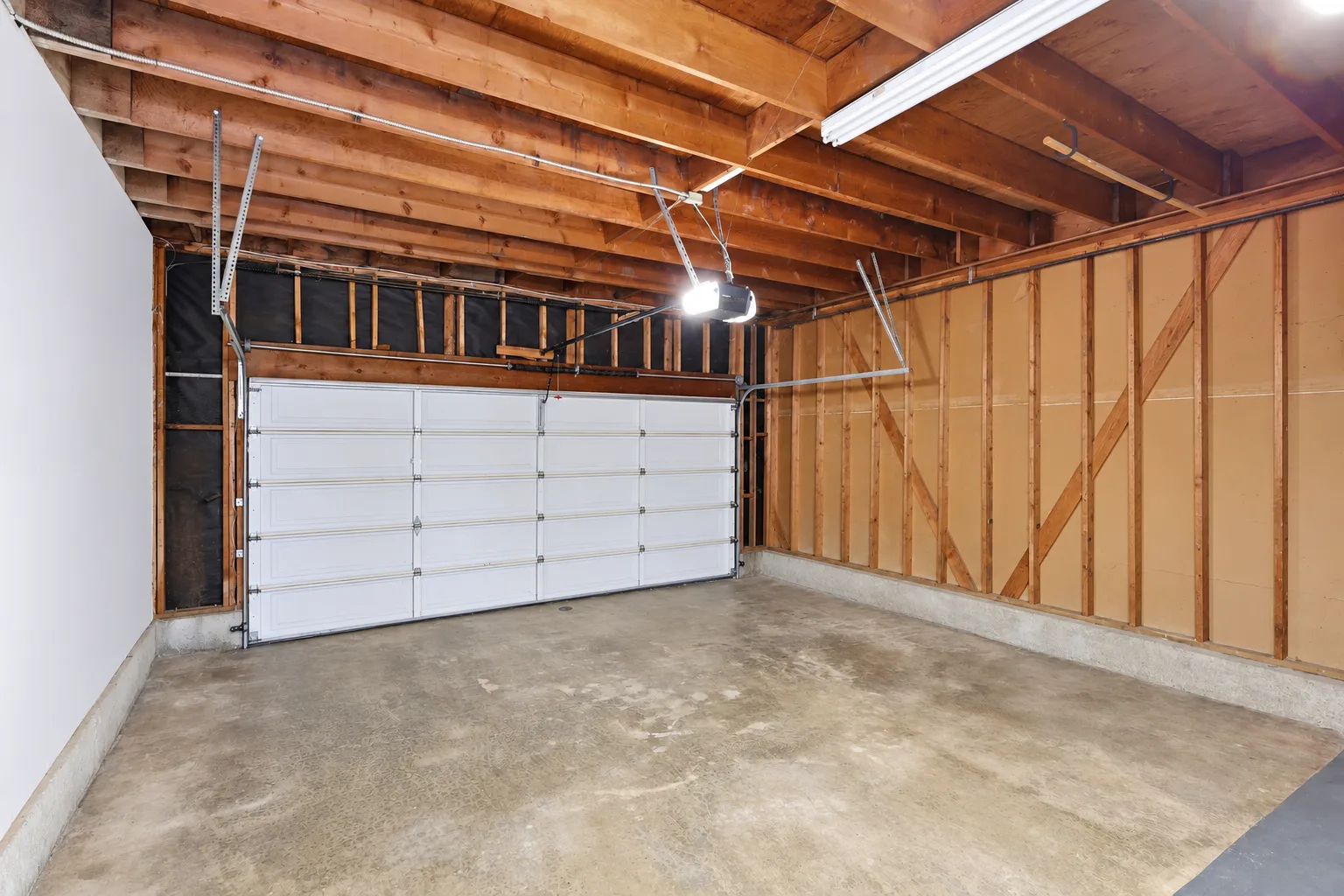
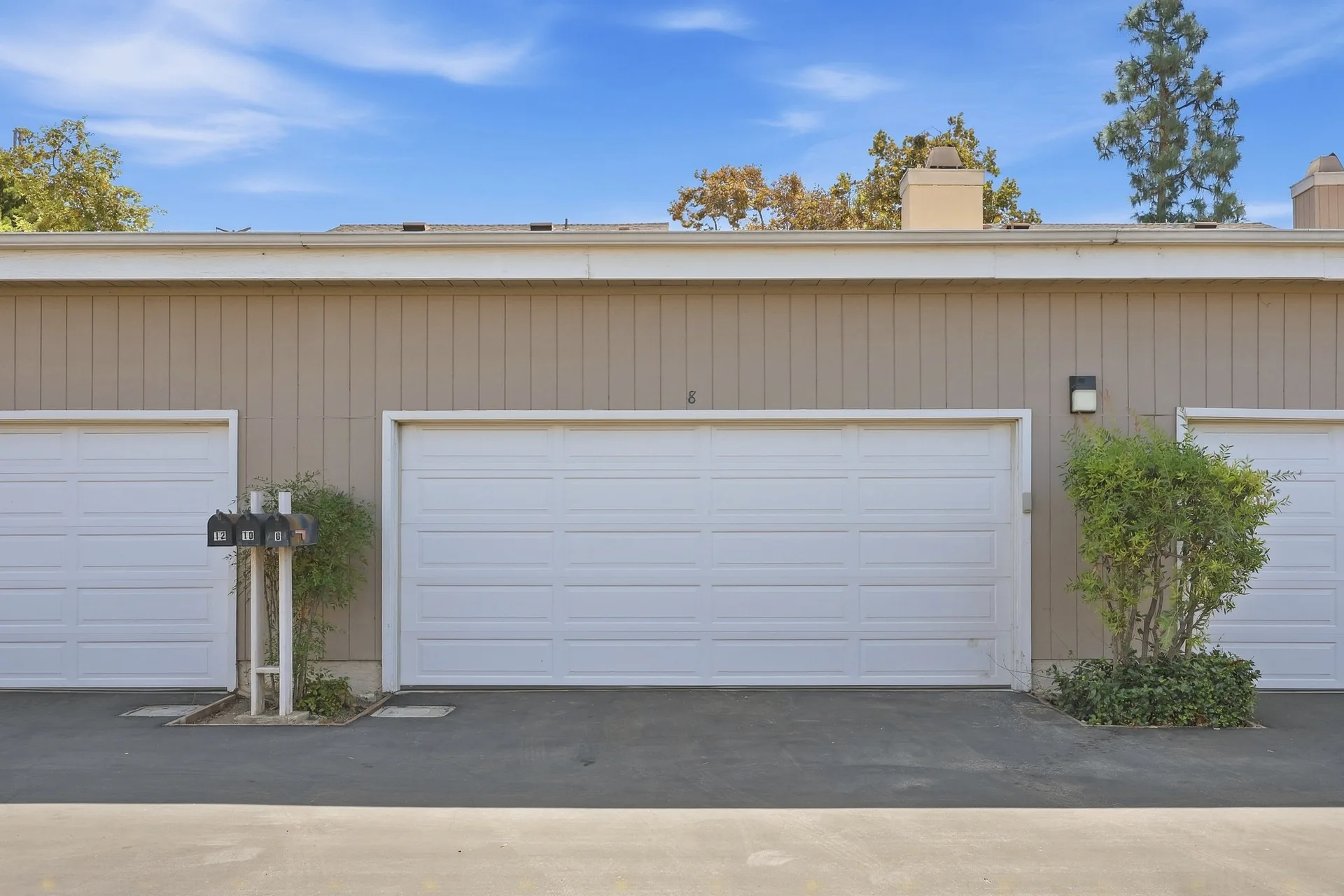
- Where is your parking designated? A garage, a carport, a deeded stall, and a shared lot each change the charging math. An attached garage like the one at 8 Silverwood keeps the charger inside the owner's space with no conduit run across common area; a shared lot usually means a board-approved run and a metered connection, which is where the section 4745 approval process actually gets used.
- Panel capacity and service. A Level 2 home charger needs a dedicated circuit and a real load. Whether the unit's panel can take the circuit, whether the service is sized for it, and how the run reaches the parking space are questions a licensed electrician must answer in person; an agent cannot guess at them, and neither should a buyer.
- The community's current rules. Ask for the association's charging policy, its approval form, and any board resolutions. Older CC&Rs may predate electric vehicles entirely, and the current rules and resolutions are what the board will actually apply.
- Insurance in the post-SB 770 world. Confirm how the community applies the insurance certificate now that the $1,000,000 minimum and additional-insured naming are gone, and check with your own carrier that a charging station is covered under your HO-6 or homeowners policy before you commit to an installation.
- If the home already has a charger. Ask for the disclosure and the approval paperwork: station age, who installed it, the insurance certificate, and any obligation to maintain or remove it on sale.
- Documents, not promises. The declaration, the current rules, and a written approval are the evidence that counts. Section 4745's remedies are the backstop if the board balks, but the smoothest path is a written request that follows the community's process with a licensed contractor and a completed electrical plan.
None of this replaces the standard attached-home homework: the HOA financials and reserve study, the SB 326 inspection file, and the maintenance map are all part of the same pre-offer review. The charging conversation fits alongside them, because it combines a statutory right with a physical installation that takes planning, and buyers are best served treating it as a document question and an electrical question at the same time. The earlier posts in this journal cover the associated HOA disclosure file and the maintenance map, and the Market Intelligence page shows where 8 Silverwood sits among nearby attached homes.
Sources and data notes
The statutory mechanics in this article are summarized from the official text of Civil Code section 4745 and from legal references and law-firm guides named below, each with an access date. The primary sources are:
- California Legislative Information, Civil Code section 4745 (official text), accessed November 4, 2026. leginfo.legislature.ca.gov
- HOA Law Blog, "Civil Code 4745: Electric Vehicle Charging Stations," accessed November 4, 2026. hoalawblog.com
- HOA Notes, "California HOA EV Charging Rights: What the Law Allows (2026)," accessed November 4, 2026. hoanotes.com
- Richardson Ober DeNichilo (Best HOA Lawyer), "California HOA EV Charging Station Rights," accessed November 4, 2026. besthoalawyer.com
- R.O. Attorneys, "Insurance on Charging Stations," accessed November 4, 2026. roattorneys.com
- FindHOA Law, "Electric Vehicle Charging Stations," accessed November 4, 2026. findhoalaw.com
- California Energy Commission, "California ZEV Sales Maintain Strong Performance in Q3" (October 16, 2026), for the Q3 2026 zero-emission market share of 19.1% and battery-electric share of 16.3%. energy.ca.gov
Data notes: the charging-rights summary reflects Civil Code section 4745 and SB 770 (Stats. 2025, chapter 525, effective January 1, 2026) as described by the cited legal references and is point-in-time as of November 4, 2026. Community rules can add process to an installation, but they cannot prohibit or unreasonably restrict the right to charge; the specific form any installation takes, including the approval form, the insurance certificate, the conduit path, and panel capacity, must be confirmed with the association and a licensed electrician before a purchase decision. The CEC sales figures are the agency's Q3 2026 zero-emission and battery-electric shares as published October 16, 2026. Bedroom, bathroom, and square footage figures for 8 Silverwood are from public listing data for MLS NP26199481 and should be independently verified. This article is education, not legal, insurance, tax, or financial advice.
Explore More of 8 Silverwood
Continue into Market Intelligence, the Neighborhood guide, Property Resources, or the photo gallery for additional property information, buyer resources, and local context.