With the average 30-year fixed rate near 7.1%, one quiet financing tool has become a headline subject for California buyers: the rate buydown. A buydown is an upfront payment, usually funded by the seller or a builder, that temporarily lowers the buyer's monthly mortgage payment for the first one to three years without changing the interest rate on the loan itself. This guide explains how 2-1 and 3-2-1 temporary buydowns work, how they fit inside the seller-concession limits that FHA, Fannie Mae, and Freddie Mac allow, and what Irvine buyers should ask before structuring an offer around one.
Every figure below is attributed to a named source with an access date of November 19, 2026, and the payment example is an illustration based on the current 30-year average of 7.11% and 8 Silverwood's $810,000 list price, not a loan quote. Buydown pricing and mechanics vary by lender, program, and the actual rate locked for the buyer, so the numbers to act on come from your own loan estimate.
The one-line summary
A temporary buydown is a lump sum deposited at closing into an escrow account that subsidizes the mortgage payment for the first years, typically two points below the note rate in year one and one point below in year two on a 2-1 plan, with the loan's interest rate itself unchanged. Borrowers still qualify at the full note-rate payment, the detail most commonly misunderstood. Seller-funded buydowns count inside the concession caps: 9%, 6%, or 3% of the lesser of sales price or appraised value depending on the down payment under conventional rules, and 6% of the sales price under FHA rules, so the buydown shares that credit with closing costs and prepaids.
Why buydowns matter in a 7% market
The rate backdrop is the reason this topic is worth reading this week. Freddie Mac's Primary Mortgage Market Survey released November 12, 2026 put the national average 30-year fixed rate at 7.11%, a fourth consecutive weekly decline from 7.18% the week before, per this journal's Market Notes for November 16 and the site's Market Intelligence page. The same edition reported that purchase applications jumped 8% in the week ending November 6, the first meaningful demand response in months, though still roughly 18% below a year earlier, and that market pricing of a December Federal Reserve rate hike stood at roughly 100%.
What that combination means is a buyer who wants the lower payment now cannot assume rates keep sliding. The levers available are down payment, loan program, seller credits, and buydowns. A buydown is the one lever that changes the monthly payment without changing the price you negotiate or the money you put down, which is why it keeps showing up in purchase contracts, especially in attached-home markets like Irvine's where sellers and builders use credits to make a deal work at today's rate level.
The purpose of this article is not to argue that every buyer should pursue one. It is to make sure the buyers who are offered one, or who plan to ask for one, understand what the structure actually does: what it costs, who can pay for it, what the payment does in year three, and where the limits are written into the loan programs.
How a temporary buydown works
The first thing to understand is the distinction between the note rate and the payment. In a temporary buydown, the interest rate on the loan never changes. Instead, money placed into a separate buydown account at closing is used each month to top up the buyer's payment to what it would be at the full note rate. The borrower pays the reduced amount; the account pays the difference. The note rate is the permanent rate for the life of the loan.
The common shapes are the 2-1 and the 3-2-1. A 2-1 buydown prices the payment as if the rate were two points below the note rate in year one and one point below in year two, with the full note-rate payment starting in year three. A 3-2-1 buydown does the same at three, two, and one points below for years one through three, with the full payment from year four. FHA commonly uses 2-1 and 1-0 plans, where a 1-0 buydown lowers the payment by one point in year one only, and FHA rules allow the year-one reduction on a fixed-rate loan to be no more than two points, rising no more than one point per year.
The mechanics are the same across programs. The buydown account must be fully funded at closing and held separately from the lender's own funds (Fannie Mae Selling Guide B2-1.4-04 states this explicitly). Freddie Mac requires the borrower to agree in writing that the funds will be applied automatically each month to reduce the payment. If the loan is paid off, refinanced, or foreclosed during the buydown period, the remaining funds in the account are applied to the outstanding principal balance rather than returned to the seller, a detail that matters if you expect to refinance quickly.
Conventional temporary buydowns are limited to three years with a maximum first-year reduction of three points, and Freddie Mac does not permit temporary subsidy plans with cash-out refinances or on its shorter-term adjustable-rate products. FHA buydowns are purchase-money only, on fixed-rate loans for a primary residence or second home, and are not available on refinances or adjustable-rate mortgages. If a seller or builder offers to "buy down" your loan, the first question is which shape and which program, because those answers set the limits.
The 2-1 math on a real price point
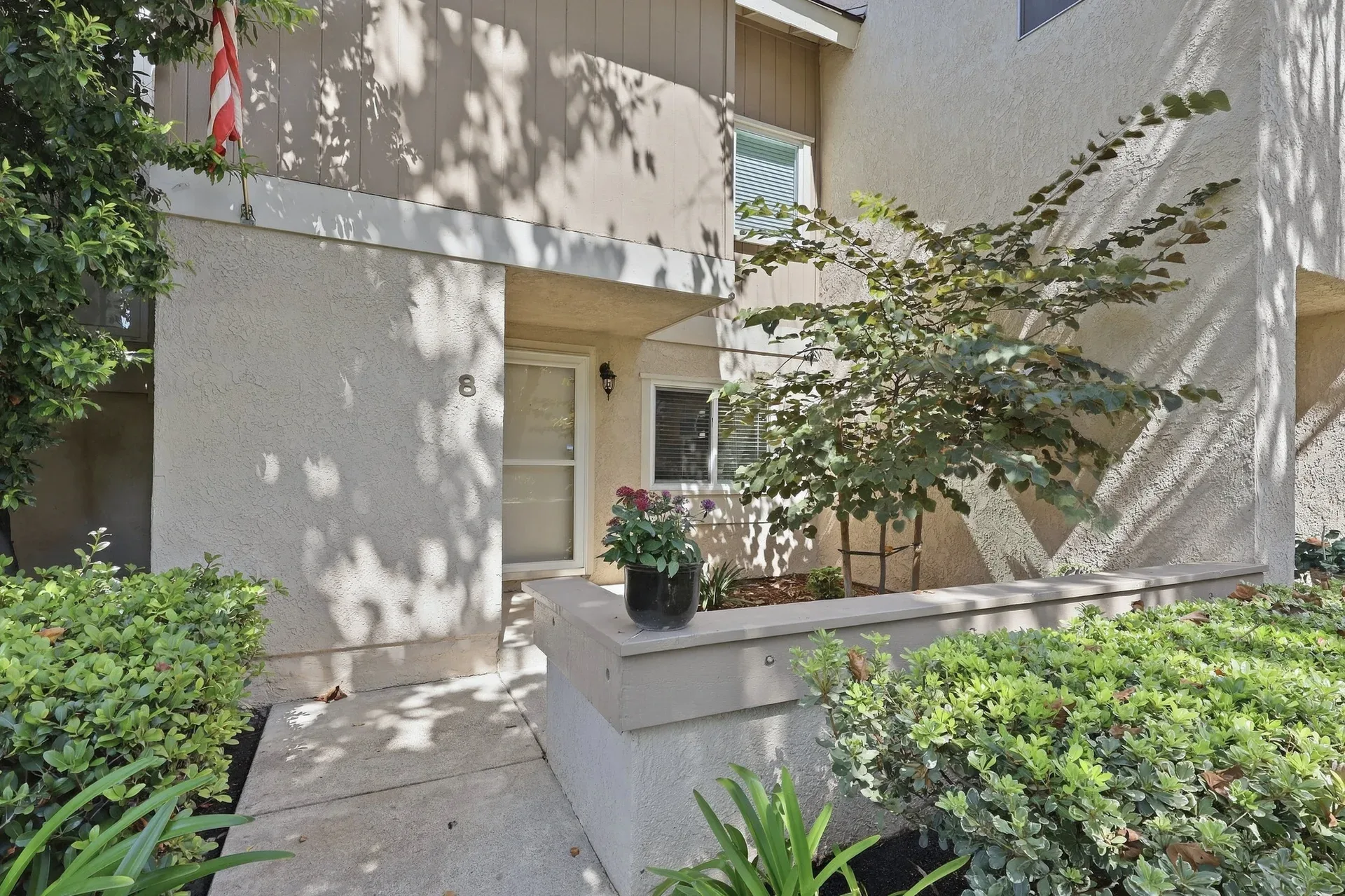
An illustration makes the effect concrete. Take the price point of 8 Silverwood, listed at $810,000, and a buyer putting 20% down, a $648,000 loan, on a 30-year fixed mortgage at a 7.11% note rate. The principal-and-interest payment at the full note rate is approximately $4,360 per month.
- Year one at a 5.11% payment rate: about $3,520 per month, a savings of roughly $840 per month.
- Year two at a 6.11% payment rate: about $3,930 per month, a savings of roughly $430 per month.
- Year three onward at the full 7.11% note rate: about $4,360 per month.
The total subsidy across the first two years in this example is roughly $15,000. The cost of funding a 2-1 buydown is generally a range: Quicken Loans puts the typical cost at about 1.5% to 2.5% of the loan amount, and a worked example from Herring Bank shows a $380,000 loan at a 7.25% note rate with a buydown escrow of about $8,960, roughly 2.4% of the loan. On the $648,000 loan above, that range lands near $10,000 to $16,000, consistent with the subsidy math.
Two honest caveats. First, these are principal-and-interest figures only; property taxes, homeowners insurance, and association dues are owed on top in every year, and an attached home in Irvine carries the latter regardless. Second, the payment numbers are illustrative arithmetic at stated assumptions, not a quote: the actual reduction depends on the rate you lock and the lender's pricing, which is why the buydown cost should come from a written loan estimate before you commit to the structure in an offer.
Who can pay, and what are the caps?
A buydown can be funded by the seller, by a builder on new construction, or by the lender in the form of a lender credit, and the funder changes the rules you are operating under. When the seller funds it, the buydown is treated as a seller concession, and it counts against the same limit that covers other seller-paid closing costs, prepaids, and credits.
The conventional limits, shared by Fannie Mae and Freddie Mac, are tiered by loan-to-value and measured on the lesser of the sales price or the appraised value, per Fannie Mae Selling Guide B3-4.1-02 and Freddie Mac Guide Section 5501.5:
- 9% when the loan-to-value ratio is 75% or less, for a primary residence or second home.
- 6% when the loan-to-value ratio is above 75% and up to 90%.
- 3% when the loan-to-value ratio exceeds 90%.
- 2% for investment properties.
FHA's cap is a flat 6% of the sales price for the total of seller-paid costs including a buydown, under HUD Handbook 4000.1. The practical consequence is that a seller credit big enough to cover a 2-1 buydown plus normal closing costs fits comfortably inside the caps at most loan-to-value levels, but the credit cannot exceed them, and the appraised value matters: if the home appraises below the contract price, the cap is calculated on the lower number, which can shrink the room available. Your lender computes the exact ceiling from your down payment, sales price, and appraisal, so the numbers on your file, not a general rule, are the ones that govern.
Permanent buydowns and discount points
A temporary buydown reduces early payments for a fixed number of years. A permanent buydown actually lowers the interest rate for the life of the loan, achieved by paying discount points at closing. One point costs 1% of the loan amount, and a point typically lowers the rate by about 0.25 percentage points according to Freddie Mac guidance cited by HSH, though the actual reduction varies by lender from roughly 0.125 to 0.25 points, so the trade should always be priced on a written quote.
The choice between the two is a time horizon question. A permanent buydown pays off only if you keep the loan long enough for the monthly savings to exceed the points paid, which argues for it when the buyer plans to stay. A temporary buydown is a cash-flow bridge, useful when the early years are the tight ones, such as a first job out of training, a planned renovation, or a second income arriving down the road. For a buyer who expects to refinance within a few years, paying heavy points can be the wrong trade, because the remaining prepaid interest is tied to a loan that is being retired, while the temporary buydown structure at least applies leftover funds to principal if the loan ends early. This is exactly the kind of comparison a lender should run both ways on your numbers.
What you qualify on, and the payment jump
The most important rule to internalize: conventional and FHA underwriting both qualify the borrower at the full note-rate payment, not the temporarily reduced payment. A buydown therefore never qualifies you for a larger purchase; it gives you payment relief inside the amount you already qualify for. That is a feature from a risk standpoint, because it keeps buyers from stretching on the strength of an artificially low early payment.
The risk that is real is the budget, not the qualification. In year three of a 2-1 plan the payment steps up roughly $840 per month in the illustration above, and in a 3-2-1 plan it steps up in both year three and year four. Buyers who budget on the buydown payment instead of the note-rate payment can find the step-up uncomfortable, especially with HOA dues and property tax as fixed monthly companions. The healthy approach is to plan the household budget around the full payment from day one, treat the lower early payments as savings, and let the buydown build that cushion rather than absorb it.
How do the tax rules treat points and buydowns?
The tax treatment of points, including buydown costs, depends on how the transaction is documented, and it is worth a conversation with a tax professional rather than an assumption. For a purchase of a main home, discount points are treated as prepaid interest, and the IRS allows them to be deducted in the year paid if the borrower itemizes and meets the tests in IRS Topic 504, including that the points were not paid in place of items ordinarily itemized on the settlement statement and that they are in line with what is generally charged in the area.
Seller-paid points receive a specific treatment under IRS Publication 530: the borrower is generally treated as having paid them, which is favorable for deduction purposes if the tests are met, but the seller-paid amount also reduces the home's basis, so there can be a capital-gains consequence down the road. If the buyer's own funds at closing are less than the points charged, only the portion covered by the buyer's own funds is deductible in the year paid, with the remainder spread over the life of the loan. The lines between discount points, buydown subsidies, and lender credits are drawn on the closing disclosure, so keep that document and show it to your tax advisor alongside your questions.
What this means for an Irvine buyer
The 2026 loan limits matter here. The FHFA set the national conforming baseline at $832,750 for 2026, and Orange County, a high-cost area, has a ceiling of $1,249,125 for a one-unit property, 150% of the baseline. Loans above the baseline and at or below the county ceiling are high-balance conforming loans, still eligible for Fannie Mae and Freddie Mac purchase, often with down payments as low as 5% on a primary residence, while any loan above the $1,249,125 ceiling is jumbo. At 8 Silverwood's $810,000 list price, a 20% down payment leaves a $648,000 loan, inside the standard conforming baseline, so no high-balance or jumbo complications at that structure, and even a 10% down payment keeps the loan within the county ceiling.
The concession caps at that price point are roomy. A 3% cap is $24,300, a 6% cap is $48,600, and a 9% cap is $72,900, so a conventional buyer below 75% loan-to-value or an FHA buyer can fund a typical 2-1 buydown and still have room for closing costs inside the same seller credit. The reason this matters in Irvine's attached market is that concessions are a normal negotiating currency here: when inventory gives buyers more to compare, as this journal's market notes have tracked through November, sellers who want to move a property lean on credits, and a buydown is one of the most legible ways to use one.
Two continuities to keep straight. First, a buydown reduces the mortgage payment, not the ownership costs that ride along: at 8 Silverwood the listing data references the Doe Trail Condo Association at approximately $582 per month and the Deerfield Community Association at approximately $351 per quarter, and those dues continue in every year of the buydown, as do property taxes (covered in this journal's Irvine property tax guide). Second, for attached homes the loan file is about more than the payment: condo project eligibility, association insurance, and reserves feed into which programs can be used at all, the subject of this journal's condo financing explainer, and the FHA project approval guide for the program with the 6% concession cap. A buydown is a financing structure on top of those gating questions, not a substitute for them.
Questions to ask your lender before an offer
Ensuring a buydown works the way you expect is a five-question conversation with the lender, ideally before the offer is written:
- What exactly does the buydown cost, in points and in dollars, and does the note rate stay unchanged? Get the reduced payment for each year in writing.
- What payment do we qualify on, the reduced payment or the full note-rate payment, and does that change the loan amount we can target?
- What is the seller-concession ceiling for my program, down payment, and the appraised value, and how much of a seller credit remains for closing costs after the buydown is funded?
- If we pay off or refinance during the buydown period, do the remaining escrow funds go to principal, and is that written into the documents?
- Compared to discount points or a larger down payment, which structure wins on my numbers and my expected time in the home?
If the answer to any of these is a surprise, it should be resolved before the offer, because once the buydown is in the contract, the dollars are committed with limited room to renegotiate. A good lender will run a 2-1 and a points comparison side by side, and the right answer for the purchase at hand is the one that fits both the program and the buyer's actual cash flow, not the one that looks best in a headline.
Sources and data notes
The mechanism, limit, and tax figures in this article are drawn from the named references below, each with an access date of November 19, 2026:
- Freddie Mac Primary Mortgage Market Survey, survey released November 12, 2026 (30-year 7.11%, 15-year 6.45%), as reported on this site's Market Intelligence page and this journal's Market Notes for November 16, 2026. freddiemac.com/pmms
- Mortgage Bankers Association Weekly Applications Survey, week ending November 6, 2026 (Purchase Index +8%, purchases roughly 18% below year-ago), via the November 16 Market Notes and HousingWire.
- Quicken Loans, "2-1 Buydown Mortgages: A Complete Guide," for the typical 2-1 buydown cost of about 1.5% to 2.5% of the loan amount, the escrow mechanics, and the principal-application of unused funds. quickenloans.com
- Herring Bank, "2-1 Buydown: How It Works, Costs and When It Pays," for the worked example of a $380,000 loan at a 7.25% note rate with a buydown escrow of about $8,960, roughly 2.4% of the loan. herringbank.com
- Consumer Financial Protection Bureau and Freddie Mac points guidance, as cited by HSH, "How much do points affect the interest rate?," for one point equal to 1% of the loan amount and roughly a 0.25-point rate reduction, with lender variation. hsh.com
- Fannie Mae Selling Guide B2-1.4-04 (temporary interest-rate buydowns) and B3-4.1-02 (interested-party contributions), for the fully funded separate escrow, the 3-year and 3-point conventional limits, and the 9%/6%/3% primary-residence and 2% investment-property caps on the lesser of sales price or appraised value, via Homebuyer.com and FHLB MPF. homebuyer.com
- Freddie Mac Single-Family Seller/Servicer Guide sections 4204.3 and 4204.4 (temporary subsidy buydown plans) and 5501.5 (financing concessions), for the written-payment agreement, the exclusions (cash-out refinances, shorter-term ARMs), and the concession caps aligned with Fannie Mae. homebuyer.com
- HUD Handbook 4000.1 and FHA practice, for FHA temporary buydowns (2-1 and 1-0 on fixed-rate purchase-money loans, year-one reduction of no more than 2 points, annual increases of no more than 1 point, fully funded escrow, no refinance or ARM use) and the 6% of sales price interested-party cap, via Homebuyer.com and RealCostIQ. realcostiq.com
- FHFA 2026 conforming loan limit announcements via CLTA and Cohen Financial Group: national baseline $832,750, Orange County high-cost ceiling $1,249,125 for one-unit properties, effective for loans delivered in 2026, with the high-balance band eligible for Fannie Mae and Freddie Mac purchase. clta.org
- IRS Topic 504 (home mortgage points) and IRS Publication 530 (treatment of seller-paid points), for year-paid deductibility of qualifying points on a main-home purchase, the buyer-treated-as-payer rule for seller-paid points, the basis reduction, and the own-funds limitation. irs.gov
Data notes: the payment figures in the illustration are principal-and-interest arithmetic computed at the stated assumptions, a $648,000 loan at a 7.11% note rate with 2-1 payment-rate steps, and are not a loan quote; actual payments, buydown costs, and rate reductions come from a written loan estimate. The roughly 1.5% to 2.5% buydown cost range, the one point equals 1% of loan amount rule, the roughly 0.25-point rate reduction per point, the conventional 9%/6%/3%/2% contribution caps, the FHA 6% cap, the 3-year and 3-point conventional limits, and the FHA purchase-money and fixed-rate restrictions follow the cited sources and vary by lender and program. The 2026 conforming baseline of $832,750 and Orange County ceiling of $1,249,125 are effective for loans delivered in 2026. The 30-year rate of 7.11% and the purchase-application change of +8% are dated to the November 12, 2026 PMMS survey and the week ending November 6, 2026 MBA survey respectively, as reported in this journal's Market Notes for November 16. The 8 Silverwood price of $810,000, the Doe Trail Condo Association fee of approximately $582 per month, the Deerfield Community Association fee of approximately $351 per quarter, and the bedroom, bathroom, and square footage figures come from public listing data for MLS NP26199481 and the site's Market Intelligence page and should be independently verified. Tax treatment depends on the actual closing disclosure and individual circumstances. This article is education, not mortgage, legal, tax, or financial advice.
Explore More of 8 Silverwood
Continue into Market Intelligence, the Neighborhood guide, Property Resources, or the photo gallery for additional property information, buyer resources, and local context.